
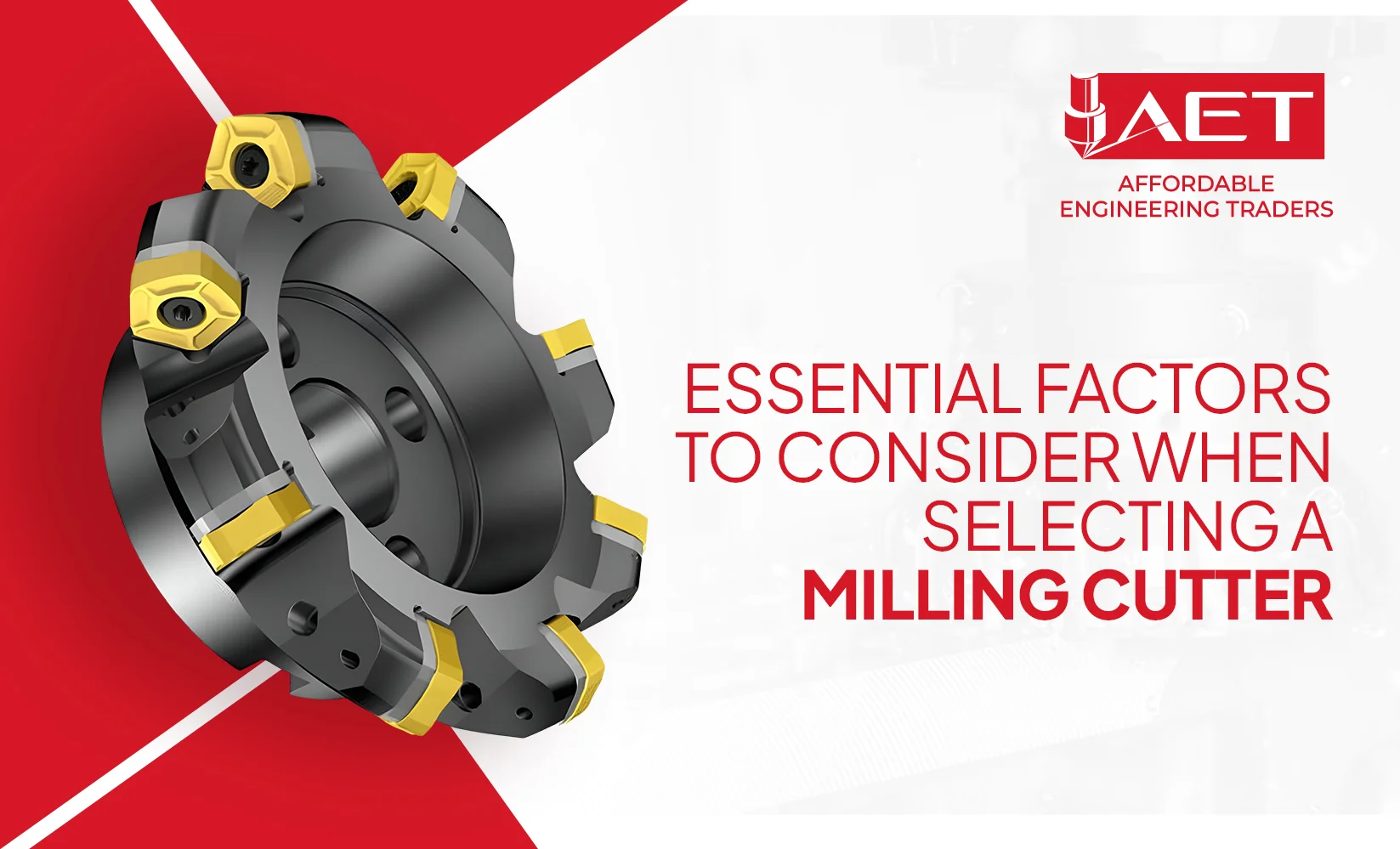
In the world of precision machining, the milling cutter serves as the fundamental element for achieving precise metalworking operations. The performance of your milling cutter determines both productivity rates and surface quality and total operational costs when manufacturing automotive parts or aerospace components or custom equipment.
The numerous milling cutter options available on the market make it difficult for buyers to select the appropriate tool. The selection process includes numerous aspects starting from tool material through geometry and coating as well as specific application designs. In this blog, let us explore the four fundamental elements of milling cutters to perform high-performance applications.
4 Most Vital Factors to Select a Milling Cutter
There are other essential factors for selecting a milling cutter but the most important ones include:
1. Material of the Workpiece
Before examining cutter specifications, it is better to determine the material type you will machine. The workpiece properties of hardness and toughness together with thermal characteristics determine which milling cutter you should select.
To achieve clean cuts in aluminum and other soft materials you need milling cutters that feature high rake angles and sharp edges.
The cutting tools for medium-hard materials such as carbon steel need to possess solid construction with moderate edge durability and heat resistance.
The tooling requirements for cutting stainless steel along with titanium and heat-treated alloys need advanced coating systems and cutting geometries to handle heat generation while protecting the cutting edge.
Each material reacts differently under machining stress. The preferred cutter choice for heat dissipation and wear resistance in such situations is carbide cutters with TiAlN coating.
2. Cutter Geometry and Design
The geometry of a milling cutter determines how it will engage the material. Wrong design selection may lead to a poor surface finish, heavy breakage or tool wear. Some considerations involved in the design include:
A. Number of Flutes
A few flutes (2 to 3) provide plenty of space for evacuation of chips and are mostly suitable for softer materials such as aluminum.
Having several flutes (more than 4) ensures greater strength and a higher surface finish at the expense of chip clearance, especially for sticky materials.
B. Helix Angle
Lower angles help in being strong and tough (e.g., 30°).
Higher angles enhance surface finish and lower cutting forces (e.g., 45°).
C. End Type
Flat-end mills for cutting flat surfaces and grooves.
Ball-end mills for 3D contouring and complex geometries.
Corner radius end mills stand in between—they offer longer life.
One will need to select the right tool geometry according to the actual needs whether for slotting, contouring, ramping, or finishing. With the right experience, a distributor such as Affordable Engineering Traders would be able to suggest the geometry for you that presents the best compromise between strength, chip control, and efficiency.
3. Tool Material and Coating
Another main tool of defining a milling cutter is the tool material that goes into it. Being one of the common materials, it comprises of:
- High-Speed Steel: Budget friendly and can be easily sharpened and resharpened; it is only suitable for low-speed operations and soft materials.
- Carbide: Harder and highly heat-resistant making it suitable for high-speed, high-efficiency machining of harder materials.
- Ceramic or CBN: For those rare cases involving extremely hard metals and really high temperatures.
But the material alone cannot guarantee the tool’s performance. A coating will improve the performance of tools by reducing friction amongst tool and stock material, increasing heat resistance, and consequently, extending the tool life.
Common coatings include:
- TiN (Titanium Nitride): Generally used for hardening of tools.
- TiAlN (Titanium Aluminum Nitride): Excellent for use at very high temperatures.
- AlTiN (Aluminum Titanium Nitride): More heat resistant and oxidation stable.
- DLC (Diamond-like Carbon): Used on non-ferrous metals and plastics.
Get the coatings matched up with the workpiece material and speed for optimum results. The initial cost of a well-coated carbide tool may be high, but it will reduce downtime and tool changes significantly, thus earning the investment.
4. Machine Capabilities and Operating Conditions
The very best milling cutter still would not produce results when abused and mismatched to various capabilities of the machine. Consider the following before selecting a tool:
A. Spindle Speed and Feed Rates
High-speed carbide tools demand similarly high spindle speed to be an effective tool. Make sure that the machine can sustain such speeds safely and consistently.
B. Tool Holding System
Vibration and deflection due to the bad holding of a tool have an adverse effect on tools life leading to broken tools prematurely. Be sure your collets or tool holders are in good condition and fit the cutter shank.
C. Coolant
Some operations, especially with hard materials, call for flood coolant or minimum quantity lubrication (MQL) to control heat and chips. Make sure that your machine can carry out its coolant delivery tasks effectively.
D. Stability and Rigidity
Heavy roughing calls for setups having less chatter. Light or unstable machines may simply never be able to weigh down aggressive feed or deep cuts.
To suggest buying a milling cutter without evaluation of your machine is akin to buying racing tires for a scooter. Always try to select your cutter in accordance with the specifications and limits of your equipment.
Final Thought
To conclude, the selection of a suitable tooling supplier stands as an equally important factor. The combination of premium milling cutter offerings with expert advice and after-sales support from Affordable Engineering Traders allows companies to maximize their investment performance. The right cutter selection today helps job shops that work with multiple materials and maintain 24/7 production facilities to improve output levels while spending less money and protecting their future machining operations.


